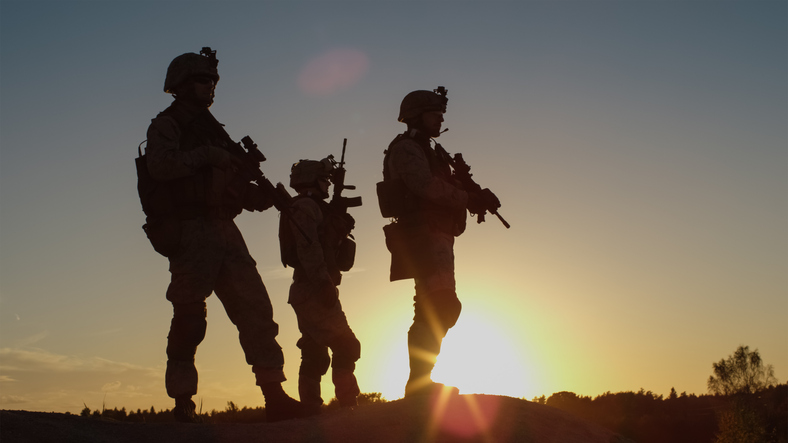
Last week was Veterans Day, an excellent reminder to honor the courage and sacrifices of our country’s soldiers. Hearing damage is a major hazard of military service; in fact, it is the most common service-connected disability, affecting nearly three million service members.1 Since hearing loss and tinnitus are so prevalent among this group, we wanted to start a discussion about it.
Loud Noise
As you probably know, sound is measured in decibels. Noise becomes harmful to hearing at 85 decibels,2 which is about the volume of a blender. The louder the sound, the less time it takes for it to cause damage.
Loud noise is ubiquitous in military service. Firearms, artillery, aircraft, tanks and heavy machinery are everywhere; explosions and gunfire are frequent. These noise hazards are at or exceed 120 decibels, a level at which you will experience immediate hearing damage.
Noise-Induced Hearing Damage
The inner ear is lined with delicate sensory cells that collect and transmit sound information to the brain. The sound waves from 120-decibel noises are so powerful that they will bend or break these cells on impact.
When the sensory cells are damaged, they cannot transmit sound information to the brain, so you cannot perceive or hear it. This is called noise-induced hearing loss, or NIHL. The first sensory cells to break are typically the ones that pick up high-frequency noises, as those cells are the thinnest and positioned at the front of the inner ear, so they bear the brunt of the sound wave’s force. This is why, with NIHL, you lose the ability to hear high-pitched sounds first.
This kind of damage can also lead to ringing in the ears, or tinnitus. This phenomenon occurs when your brain recognizes that it should be receiving sound information from your ears, but isn’t. To fill in the gaps, it will generate its own sound.
How to Get Help
We at Torrance Audiology Center honor our troops in every way we can, including treating hearing loss and helping manage tinnitus. If you are a current or former service member, you should be proactive about your hearing health, as your occupation puts your hearing at greater risk than most. Get your hearing checked early and often to watch for changes.
To schedule an appointment for a hearing test, call us to get on the calendar. We appreciate your service and look forward to helping you and your health in this critical way.
Learn More
Sources
1 Veterans. (2023, September). Hearing Loss Association of America. https://www.hearingloss.org/find-support/veterans/
2 National Institute on Deafness and Other Communication Disorders. (2022, March 16). Noise-Induced Hearing Loss. NIDCD. https://www.nidcd.nih.gov/health/noise-induced-hearing-loss