If you can hear the TV but still struggle to understand what people are saying, the issue may not be volume. For many people, the real problem is speech clarity. Certain types of hearing loss affect the ability to distinguish speech sounds, even when sounds seem loud enough.
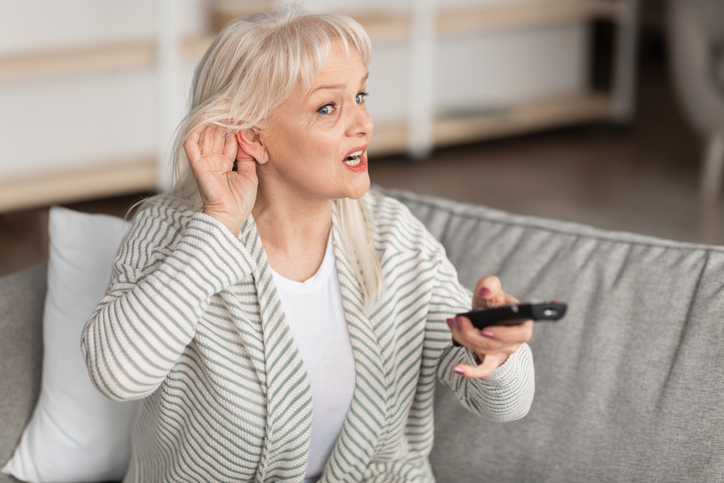
Maybe you keep reaching for the remote. Maybe captions have become a permanent fixture in your living room. Or perhaps your family insists the volume is fine while you’re still missing parts of the conversation. Those experiences are surprisingly common. According to the National Institute on Deafness and Other Communication Disorders, age-related hearing loss often affects the ability to hear higher-pitched speech sounds that help make words clear and understandable.1
Hearing And Understanding Are Not The Same Thing
Many people assume hearing and understanding are the same thing. They aren’t.
Hearing is the ability to detect sound. Understanding speech requires your ears and brain to work together to recognize and process words.
This is why someone may hear a dog barking, a door closing or music playing without difficulty but still struggle to understand a fast-moving conversation on television. Speech contains many high-frequency sounds, including “s,” “f,” “th” and “sh.” When those sounds become harder to hear, words can start blending together.
What many patients describe is simple:
“I can hear them talking. I just can’t tell what they’re saying.”
Why Television Makes The Problem Worse
Television creates listening challenges that don’t always exist in face-to-face conversations.
For one thing, you lose visual cues. In person, we naturally pick up information from facial expressions, lip movements and body language. Television doesn’t always provide those advantages.
Modern TV audio can add another layer of difficulty:
- Background music competes with dialogue
- Sound effects are often mixed louder than speech
- Characters may speak with accents or rapid pacing
- Actors are not always facing the camera when speaking
Five Signs Speech Clarity May Be The Real Issue
If any of these sound familiar, speech understanding may deserve attention:
- You use captions on most shows.
- Family members complain that the TV is too loud.
- Some voices are easier to understand than others.
- Restaurants and group conversations feel exhausting.
- You frequently ask people to repeat themselves.
Notice that none of these examples are really about volume. They’re about clarity.
Why Turning Up The Volume Often Doesn’t Help
This is one of the most frustrating parts of untreated hearing loss.
Imagine reading a blurry road sign. Making the sign larger doesn’t necessarily make it sharper.
Speech works in a similar way.
When the issue involves missing speech sounds rather than overall loudness, increasing the volume may simply create louder, unclear speech. The television gets noisier, but words may not become easier to understand.
That’s often the moment people realize something more than volume is going on.
Can Hearing Tests Measure Speech Understanding?
Yes. Many hearing evaluations include speech testing that measures how well you understand words and sentences, not just whether you can hear tones. This information helps hearing care providers identify problems that might not appear obvious in everyday listening.
Can Hearing Aids Improve Television Dialogue?
Yes. Modern hearing aids can often be programmed to emphasize speech while reducing competing sounds. Many devices also offer direct audio streaming or television accessories that send sound straight to your hearing aids.
When TV Dialogue Starts Becoming Work
A lot of people don’t realize how much effort they’re putting into listening.
At the end of a movie, your spouse may feel relaxed, while you’re mentally drained from concentrating on every conversation. That’s because your brain has been working overtime to fill in missing pieces of speech.
If television dialogue has become difficult to follow, it may be worth looking beyond the remote control.
At Torrance Audiology Center, we often meet patients who assumed they simply needed a louder television. What they actually needed was a better understanding of how their hearing was affecting speech clarity. A comprehensive hearing evaluation can help identify what’s happening and determine whether hearing aids or adjustments to existing devices may improve communication in everyday life.
Sources
1 National Institute on Deafness and Other Communication Disorders. “Age-Related Hearing Loss.” https://www.nidcd.nih.gov/health/age-related-hearing-loss