Getting into a car accident, falling down the stairs or taking a baseball to the side of the head during a friendly game in Charles H. Wilson Park are just a few of the ways you can physically injure yourself. While we tend to focus on the immediate, visible damage caused by blunt force, like a broken nose or arm, there are also injuries that can take place that may not be immediately obvious, like hearing loss.
How Physical Damage Affects the Ears
Anything that damages the hearing structures of the middle or inner ear can cause permanent or temporary hearing loss. Most permanent hearing loss stems from the inner ear, but it’s still possible for middle ear issues to do lasting damage.
A few ways physical injuries can impact your middle ear include:
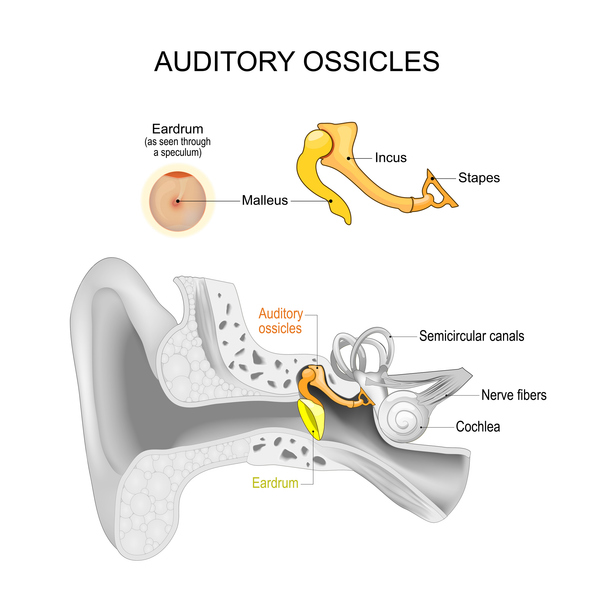
- Ruptured eardrum. A ruptured eardrum is a common cause of temporary hearing loss. It usually arises when you insert objects like cotton swabs into the ear canal. While many ruptured eardrums will heal on their own, we treat severe cases with a medicated patch.
- Broken bones. Your middle ear contains three small bones called the ossicles, which amplify sound vibrations. If a forceful blow fractures these bones, you may require surgery to repair or replace them, called an Ossiculoplasty.1
- Detached outer ear. A detached outer ear is a fairly rare injury, but a severe car accident can still cause it. When you have a detached outer ear, your ears might not collect sound as well as they should. We might recommend reconstructive surgery to reattach or reshape the ear.
Paying attention to the signs of hearing loss after a physical injury is crucial to getting early and effective treatment.
Signs of Hearing Loss
If you hit your head or use a cotton swab to clean your ears, which you should never do, keep an eye out for the following signs of hearing loss:
- Skipping social gatherings
- Getting frustrated during conversations
- Ringing in the ears
- Trouble understanding speech
- Difficulty with high-pitched noises, like children speaking
- Turning the TV up to an uncomfortable volume
- Dizziness
If you notice any of the above signs, call us at Torrance Audiology Center today to schedule a hearing test and treatment consultation.
Head trauma is serious. If you notice non-hearing-related injuries or signs of a concussion following head trauma, seek emergency medical care. A few concussion signs to watch out for include headaches, nausea or vomiting, blurry vision, fatigue, confusion or amnesia.
Sources:
1 Young, A., & Ng, M. (2024). Ossiculoplasty. StatPearls. https://www.ncbi.nlm.nih.gov/books/NBK563162/